
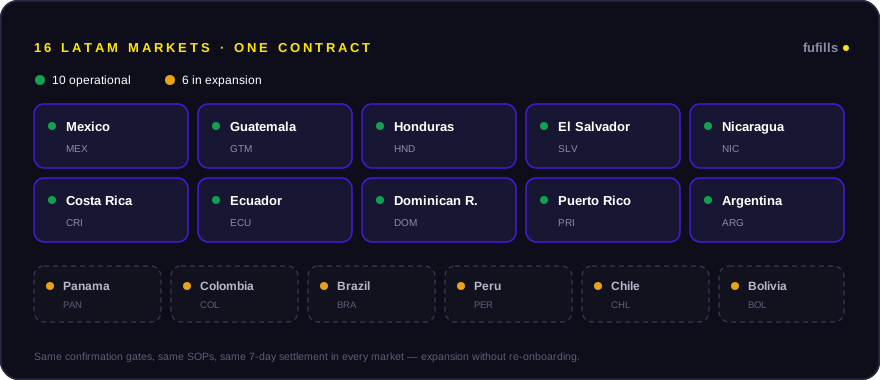
An online store with pago contra entrega is a store whose checkout lets the buyer pay in cash when the parcel arrives instead of entering a card, and in Latin America it is the format that converts best for first-time buyers, social commerce traffic and any market where card penetration is low. Setting one up takes five building blocks: a checkout that offers the option, a confirmation step before anything ships, a carrier contract that includes doorstep collection, a reconciliation process that matches collected cash to orders, and a settlement that turns local currency into a payout. A merchant can assemble those five pieces carrier by carrier, or contract a COD platform that bundles them. Fufills runs that bundle across 10 operational LATAM markets, confirms every order before dispatch, and pays merchants in USD on a 7-day cycle with a written SLA.
For the Mexican leg specifically, the comparison of Mexican paqueterías that accept pago contra entrega shows which carriers collect cash at the door and on what terms.
If the model is new to you, start with what cash on delivery means; this guide assumes you know the definition and want to build a store around it. The pago contra entrega in LATAM overview explains why the model dominates the region market by market.
Because the buyer who lands on your product page from an Instagram, TikTok or Facebook ad often has no card, or has one and will not type it into an unfamiliar site. Across Mexico, Colombia, Guatemala, the Dominican Republic and the rest of the region, a large share of adults are unbanked or underbanked, and even banked shoppers treat prepayment to an unknown store as a risk they would rather not take. Offering cash at the door removes that objection at the exact moment it appears. Stores that add pago contra entrega next to card payment routinely see the cash option become the majority of orders, which is why the money-flow explainer on COD payments treats it as the default LATAM payment method rather than an add-on.
Five components, and the order matters. First, a checkout that presents the option clearly, in the local language, with the delivery fee and the delivery window stated before the buyer commits. Second, a confirmation step: a call, WhatsApp message or SMS that verifies the buyer wants the product and that the address is real, before a label is printed. Third, a carrier agreement that includes cobro contra entrega, since collection is a contracted corporate service at every Latin American network rather than a counter product. Fourth, reconciliation, the matching of each carrier deposit to each order. Fifth, settlement, the point where collected pesos, quetzales or colones become money the merchant can spend.
| Component | Built yourself | With a COD platform |
|---|---|---|
| Checkout option | Store plugin or custom form | Store plugin or platform order form |
| Order confirmation | Your own agents or none | Included before dispatch |
| Carrier with collection | One negotiated contract per carrier per country | Several carriers under one agreement |
| Collection fee | Varies by contract | Published rate card |
| Reconciliation | Manual, per carrier report | Per order, delivered with the payout |
| Settlement | Local currency, calendar varies by contract | USD on a fixed cycle with a written SLA |
The COD shipping quote glossary entry lists the lines a carrier quote must include before the two columns can be compared on cost per delivered order.
On Shopify, enable the manual payment method and name it in the buyer's language, then restrict it to the countries you can serve so it never appears for an address you cannot deliver to. On WooCommerce, the built-in cash on delivery gateway does the same job and can be limited by shipping zone. Many LATAM merchants skip the cart entirely and sell from a single product landing page with a short order form: name, phone, address, quantity. That form is the highest-converting COD checkout in the region because it asks for nothing the buyer hesitates to give. Whatever the front end, the order must flow into the confirmation queue automatically; a store that exports orders by hand to a spreadsheet will lose the speed that makes confirmation work. The definitive guide to COD platforms in Mexico describes the integration layer in detail.
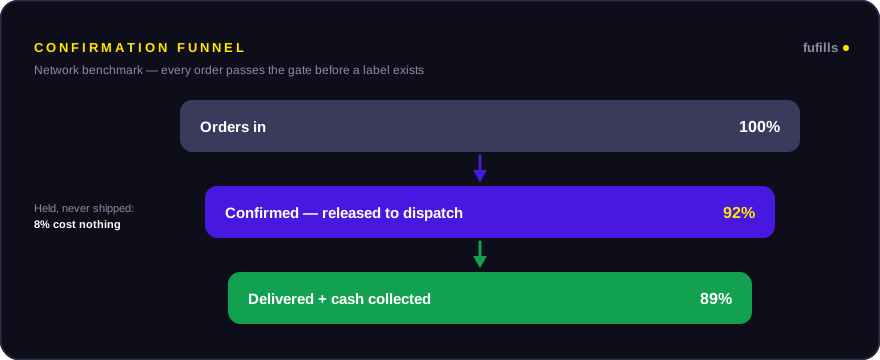
By confirming before you ship, and by measuring the confirmation rate as the first health metric of the store. An order that was never confirmed is the order most likely to be refused at the door, and a refused parcel costs the outbound trip, the return trip and the product's time out of stock with no revenue against it. The confirmation gate on the Fufills network holds 92 percent of orders confirmed before dispatch, and that gate is what keeps return-to-origin under 20 percent on the same traffic that, ungated, returns far more.
The RTO glossary entry explains how return-to-origin is calculated and why each returned parcel consumes the margin of several delivered ones.
The courier collects cash, deposits it with the branch, the carrier concentrates the day's collections and reports them, and only then can the money be matched to orders and paid out. Carrier-direct, that report arrives in the carrier's format, on the carrier's calendar, in local currency. A platform closes the loop differently: each delivered order is reconciled individually, and the merchant receives one payout in USD on a fixed cycle. On the Fufills network 89 percent of dispatched orders are delivered with cash collected, and the settlement cycle glossary entry explains why a fixed calendar matters more than the nominal number of days when you pay suppliers in dollars.
Start where your traffic already is, not where the map looks biggest. A store selling to Mexican buyers should open Mexico first and use the Mexico COD fulfillment page to check lanes and terms; a store whose audience is Central American should look at Guatemala or the Dominican Republic before anything else. The advantage of building on a regional platform is that the second market is a configuration change rather than a second stack: the same checkout, confirmation flow and USD payout apply, and the COD fulfillment overview lists every market where the model is live today.
Can I run a pago contra entrega store without a warehouse in the country?
Yes. Cross-border merchants ship inventory to a fulfillment partner inside the market, and orders are confirmed, dispatched and collected locally while the merchant operates from anywhere. The stock must be in-country before the store goes live, because COD buyers expect delivery within days, not weeks.
Does pago contra entrega work for dropshipping?
It works when the product is already in the destination country. Dropshipping from abroad on a cash-at-the-door promise produces long delivery windows, and long windows produce refusals. Move a small batch of stock in first, sell it on COD, and reorder against confirmed demand.
What is a good confirmation rate for a new store?
A new store with clean traffic and a fast confirmation queue should confirm well above three quarters of its orders. Below that, check the ad creative, the price shown at checkout and how quickly the confirmation call or message goes out after the order.
Do I need a company in each country to accept cash on delivery?
Not when you sell through a platform that holds the carrier contracts and pays you out in USD. The platform collects locally on your behalf and settles to your account under one agreement, so the merchant's legal setup stays in its home jurisdiction.
