
Paqueterías con pago contra entrega are the Mexican parcel carriers that collect payment at the buyer's door, and in 2026 the names merchants compare are Estafeta, FedEx, DHL, Paquetexpress, J&T Express and 99minutos, plus the multi-carrier COD platforms that sit on top of them. Doorstep collection is a contracted corporate service at every one of those networks, not a retail counter product, so the real comparison is the all-in cost per delivered order rather than the freight quote alone. Fufills orchestrates several of these networks in Mexico, one of its 10 operational LATAM markets, with pre-dispatch confirmation included and collected cash settled to merchants in USD on a 7-day cycle with a written SLA.
If the payment model itself is new to you, start with what cash on delivery means; this page compares the companies that physically move the parcel and the money in Mexico. For the first two carrier deep dives, see how Estafeta handles pago contra entrega and what FedEx covers in Mexico. For the express side of the table, the analysis of DHL pago contra entrega limits in Mexico shows where value caps and metro-heavy coverage bite. At the other end of the network spectrum, the guide to Paquetexpress pago contra entrega and rural coverage covers the ground carrier that reaches the interior. For the two ecommerce-era networks, the analysis of J&T Express Mexico and cobro contra entrega covers the volume-priced carrier, and the 99minutos vs Fufills comparison separates a last-mile operator from a COD platform.
Six networks dominate the shortlist. Estafeta and Paquetexpress are the long-standing Mexican national carriers, with Paquetexpress particularly known for its ground network beyond the largest metros. FedEx and DHL run domestic Mexican operations on top of their international express businesses. J&T Express and 99minutos arrived with the ecommerce parcel wave and are built around online-store volume. At all six, doorstep collection, usually sold as cobro contra entrega or contra reembolso, is enabled per account: whether you get it, what it costs and which coverage it applies to depends on your negotiated agreement, your volume and the routes you ship. The guide to pago contra entrega in Mexico explains why the model dominates Mexican ecommerce in the first place.
| Carrier | Network profile | COD at the door | COD fees and limits |
|---|---|---|---|
| Estafeta | Mexican national parcel network | By contract | Varies by contract |
| FedEx | International express with domestic Mexican coverage | By contract | Varies by contract |
| DHL | International express network | By contract | Varies by contract |
| Paquetexpress | Mexican ground network with strong regional reach | By contract | Varies by contract |
| J&T Express | Ecommerce-focused parcel network | By contract | Varies by contract |
| 99minutos | Ecommerce last-mile operator | By contract | Varies by contract |
| Fufills | Multi-carrier COD platform, not a paquetería | Native, included | Published rate card before first shipment |
Every cell that says varies by contract is deliberate. Mexican carriers price cash collection through negotiated agreements, adjust conditions between customer segments, and change them between years. Treat any specific fee or limit you read on a blog as a snapshot of one contract at one moment, and confirm current terms directly before building your unit economics on them.
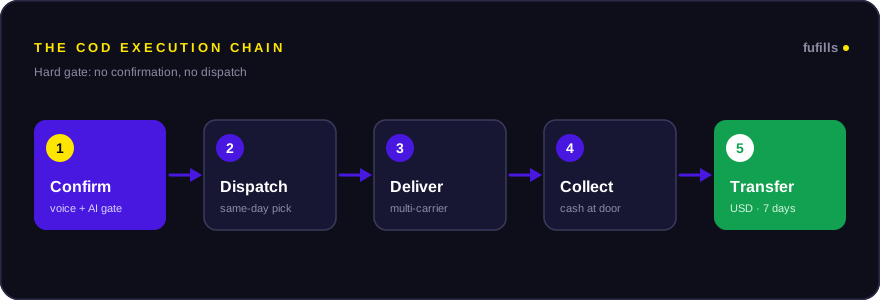
The parcel travels unpaid. The courier collects cash or a card payment at the door, deposits the day's collections with their branch, the carrier concentrates and reports the amounts, and the money then has to be matched back to individual orders before anyone can pay the merchant. That reconciliation step is where carrier-direct setups get painful: each network reports in its own format, on its own calendar, in pesos. The step that protects the whole chain happens before dispatch, though. An unconfirmed COD order that gets refused at the door costs round-trip freight with zero revenue, which is why disciplined operators gate every order behind confirmation and keep network return-to-origin under 20 percent, while unmanaged COD in the region commonly runs far higher. The RTO glossary entry covers how that metric is calculated.
A standard freight quote covers weight, dimensions and zone. A COD quote has to add the money layer: the collection commission, usually a percentage of the cash amount with a minimum, the cost of the return leg if the buyer refuses, and the settlement terms that decide when the collected cash actually reaches you. Comparing carriers on the freight line alone is the classic mistake; the COD shipping quote glossary entry breaks down every line item to demand before you sign. The number that decides profitability is the all-in cost per delivered order, calculated across confirmed, delivered and refused parcels together.
Going direct means negotiating each carrier contract yourself, running your own confirmation operation, reconciling deposits per carrier and receiving pesos on each network's calendar. It can suit an operation with a local finance team and enough volume to negotiate seriously. A COD platform inverts the work: one contract, one rate card, orders routed across several networks, confirmation handled before dispatch and one consolidated settlement. On the Fufills network the confirmation gate holds 92 percent of orders confirmed before dispatch and 89 percent of dispatched orders delivered with cash collected, numbers that carrier-direct setups have to build call centers to approach.
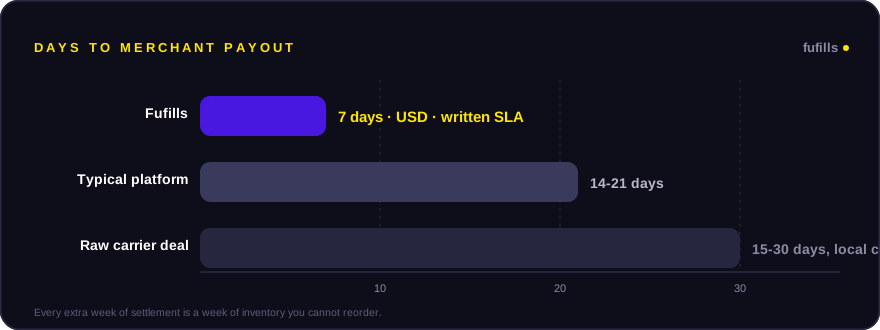
Settlement is the sharpest difference. Carrier-direct arrangements across the region commonly hold collected cash 15 to 30 days in local currency, and every extra week of float is inventory you cannot reorder.
Yes, and at scale you almost certainly should. No single Mexican network is strongest in every state: metro coverage, rural reach and delivery-attempt behavior differ by carrier and by route. Multi-carrier routing sends each order to the network most likely to deliver it, which is exactly how COD fulfillment in Mexico works end to end on the Fufills side. The catch when you do it alone is operational: three carrier contracts mean three reconciliation formats and three settlement calendars, which is the overhead a platform absorbs. Coverage, lanes and current terms for the Mexican operation are on the Mexico COD fulfillment page.
No, and treating any single country as the center is how sellers end up rebuilding their stack every time they expand. The same carrier-versus-platform logic applies across Latin America: every market has its own strong domestic carriers, its own collection quirks and its own settlement customs. Merchants who plan regionally from day one pick partners that can carry the same playbook across borders, which is the case the LATAM cash on delivery guide makes country by country.
