
99minutos and Fufills solve different halves of the same problem. 99minutos is a Mexican-born last-mile delivery operator that grew with the ecommerce wave and moves parcels for online stores in the large metropolitan areas, with cobro contra entrega available to corporate accounts under contract. Fufills is not a carrier: it is a multi-carrier COD platform that confirms every order before dispatch, routes each parcel to the Mexican network best placed for that lane, and settles collected cash to the merchant in USD on a 7-day cycle with a written SLA, with Mexico as one of its 10 operational LATAM markets. A merchant who wants fast metro delivery and already runs its own confirmation and reconciliation can contract 99minutos directly; a merchant who wants the whole cash-on-delivery chain handled under one agreement, including the lanes 99minutos does not serve, is the profile Fufills is built for.
For the wider field, the comparison of paqueterías with pago contra entrega in Mexico sets 99minutos beside Estafeta, FedEx, DHL, Paquetexpress and J&T Express; this page isolates the one comparison merchants ask about most.
99minutos is a last-mile operator. Its core product is fast delivery inside major cities, with same-day and next-day options for ecommerce parcels, and it has extended that model from Mexico into other Latin American markets. Cobro contra entrega is offered to business accounts as a contracted service: the agreement defines the commission, the eligible zones and the calendar on which collected pesos are paid out, and those terms vary by contract. What 99minutos does not sell is the layer around the parcel: it does not confirm the order before it is dispatched, it does not decide that a rural address is better served by a ground carrier, and it does not convert pesos into a USD settlement with an SLA.
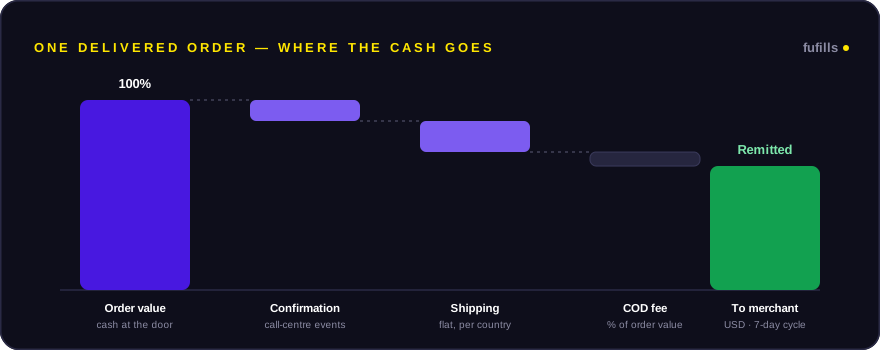
Three things a carrier structurally cannot provide. First, a confirmation gate: every COD order is contacted before a label exists, and only confirmed orders ship, which is why the network holds 92 percent of orders confirmed pre-dispatch. Second, multi-carrier routing: 99minutos, J&T Express, Paquetexpress and the other Mexican networks each get the lanes they serve best, so the merchant never pays for one network's blind spots. Third, financial closure: collected cash is reconciled per order and paid out in USD on a fixed cycle rather than in pesos on a calendar that varies by contract. The J&T Express Mexico analysis shows the same platform logic applied to a volume-priced network.
| Aspect | 99minutos direct contract | Fufills platform |
|---|---|---|
| What it is | Last-mile delivery operator | Multi-carrier COD platform |
| Access to COD | Negotiated corporate agreement | Included from the first shipment |
| Coverage | Major metros, varies by contract | Metro and regional lanes across several networks |
| Collection fee | Varies by contract | Published rate card |
| Order confirmation | Merchant runs its own | Included before dispatch |
| Reconciliation | Carrier report, merchant matches orders | Per-order, delivered with the payout |
| Settlement | Pesos, calendar varies by contract | USD on a fixed cycle with a written SLA |
No row above quotes a 99minutos fee, transit time or delivery rate, because those numbers are contract-specific and change between years. The COD shipping quote glossary entry lists what to request in writing so the two columns can be compared on the all-in cost per delivered order.
When your orders concentrate in the cities it serves, your products are small, your buyers expect delivery within hours, and you already operate a confirmation team and a finance process that matches carrier reports to orders. In that setup 99minutos is a strong last-mile partner, and a platform that routes some of those parcels to 99minutos anyway does not remove it from your stack; it removes the contract negotiation, the confirmation work and the reconciliation from your desk.
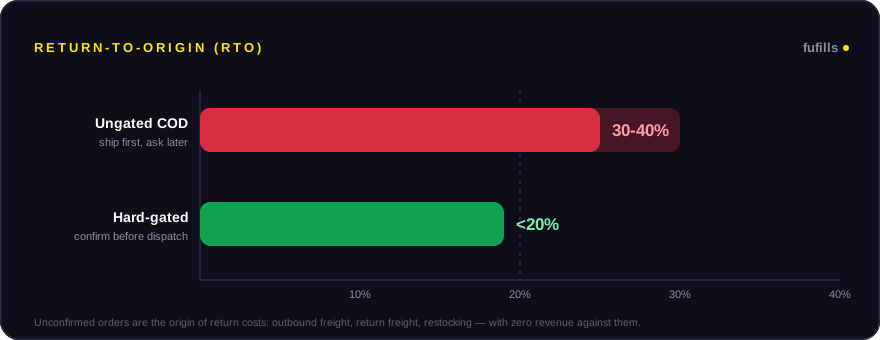
When cash on delivery is your main payment method and you want the chain managed end to end. Ungated COD in the region commonly runs a refusal rate far above what any freight discount can absorb, while the gated model on the Fufills network delivers 89 percent of dispatched orders with cash collected and keeps return-to-origin under 20 percent. The hard-gated confirmation glossary entry explains the mechanism, and the settlement cycle entry covers why a fixed USD calendar matters for a merchant paying suppliers in dollars. Coverage and current Mexican terms are on the Mexico COD fulfillment page.
No. The carrier-versus-platform question repeats in every Latin American market, and a merchant expanding beyond Mexico will meet a local 99minutos equivalent in each one. The ranking of COD platforms in Latin America compares the regional options, and the LATAM cash on delivery guide sets out the stack that does not have to be rebuilt at the next border.
Is 99minutos a COD platform?
No. 99minutos is a last-mile delivery operator that can collect cash at the door for business accounts under contract. It does not confirm orders before dispatch, route across other carriers or settle in USD, which are the functions of a COD platform.
Can Fufills route parcels through 99minutos?
Yes. Fufills is carrier-agnostic and uses the Mexican network best placed for each lane, which can include 99minutos for fast metro delivery, with confirmation, reconciliation and payout handled by the platform under a single agreement.
Which is cheaper, 99minutos or Fufills?
There is no single answer, because 99minutos prices collection and freight by contract. The comparison that matters is the all-in cost per delivered order across confirmed, delivered and refused parcels, which is where the pre-dispatch confirmation gate changes the result.
Does 99minutos operate outside Mexico?
It has extended its last-mile model to other Latin American markets, with coverage and services that vary by country. Merchants expanding across the region should confirm current coverage per market before building a stack around any single operator.
