
Paquetexpress pago contra entrega is the contracted doorstep-collection service of one of Mexico's national ground carriers, and its distinctive strength is reach: Paquetexpress grew out of the north and west of the country and runs a road network that serves many mid-sized cities and rural municipalities where express couriers are thin or absent. Collection is enabled per corporate account, with commissions and coverage that vary by contract, and refused parcels come back at the merchant's cost. Merchants who need rural coverage without negotiating a single-carrier agreement route orders through a multi-carrier COD platform. Fufills orchestrates several Mexican parcel networks, with Mexico as one of its 10 operational LATAM markets, confirms every order before dispatch and settles collected cash in USD on a 7-day cycle with a written SLA.
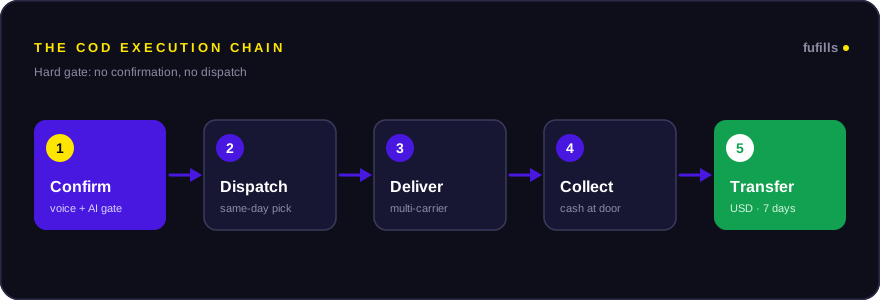
This page covers one carrier; the full comparison of paqueterías with pago contra entrega in Mexico sets Paquetexpress next to Estafeta, FedEx, DHL, J&T Express and 99minutos.
Yes, under contract. Paquetexpress sells cobro contra entrega as part of its corporate catalog, and like every major Mexican network it enables the service account by account: a negotiated agreement defines which products carry collection, the commission on the cash amount, the reporting format and the calendar on which collected pesos reach the merchant. Walk-in shippers do not get it. The pattern is identical to the one described for Estafeta pago contra entrega; what differs is where each network is strong.
Because Mexican COD demand is disproportionately rural. Buyers in small municipalities are the least likely to hold a credit card, the most likely to distrust prepayment, and the most likely to order from social commerce, which makes them the core of the cash-on-delivery customer base. A carrier that reaches them by road, with local drivers who know the addresses, converts orders that an express network would either decline or deliver late. Paquetexpress' regional depth is the reason it appears on every serious Mexican COD shortlist, and it is the mirror image of the trade-off explored in the DHL pago contra entrega analysis, where speed in the metros comes at the price of reach outside them.
| Aspect | Paquetexpress direct contract | Fufills platform |
|---|---|---|
| Access to COD | Negotiated corporate agreement | Included from the first shipment |
| Network positioning | Ground network, strong regional and rural reach | Routed across several Mexican networks by lane |
| Collection fee | Varies by contract | Published rate card |
| Transit time | Ground pace, varies by zone | Best available network per route |
| Order confirmation | Merchant runs its own | Included before dispatch |
| Settlement | Pesos, calendar varies by contract | USD on a fixed cycle with a written SLA |
Numbers you find elsewhere for Paquetexpress commissions or delivery days are snapshots of individual contracts; the COD shipping quote glossary entry lists what to demand in writing so your own quote is comparable on the all-in cost per delivered order.
Longer routes mean more days between order and doorstep, and every extra day gives the buyer time to change their mind. Rural addresses are also harder to normalise, phone reception is patchier, and a failed first attempt costs a full second trip. The remedy sits before dispatch and during delivery: confirm the order and the address while the buyer is still enthusiastic, then retry intelligently rather than returning at the first failed attempt.
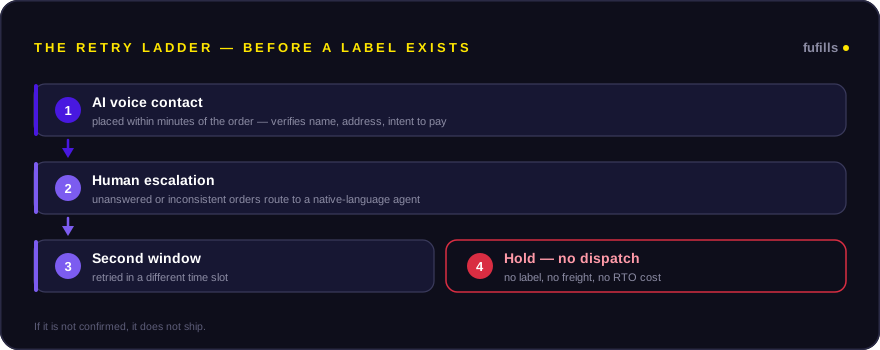
The last-mile delivery glossary entry covers why the final kilometres carry most of the cost, and the RTO glossary entry shows how each returned parcel wipes out the margin of several delivered ones.
A multi-carrier COD platform that uses Paquetexpress where it is strongest and other networks where they are. One agreement, and each order is routed to the Mexican network most likely to deliver it on that lane, ground for the regional interior and faster networks for the metros. The confirmation gate on the Fufills network holds 92 percent of orders confirmed before dispatch and 89 percent of dispatched orders delivered with cash collected, which keeps return-to-origin under 20 percent even on long rural routes. Coverage, lanes and current terms for the Mexican operation are on the Mexico COD fulfillment page.
No. Every Latin American market has its own version of the interior-versus-metro split, and in each one the merchant who plans for both from day one keeps a larger share of orders. The guide to pago contra entrega in Mexico covers the Mexican specifics, and the LATAM cash on delivery guide walks the same carrier-versus-platform decision across the region so that the stack chosen for Mexico does not have to be rebuilt at the next border.
