
Cash on Delivery (COD) dominates e-commerce in Latin America, accounting for 50-75% of transactions depending on the country. For merchants expanding to LATAM, mastering COD operations isn't optional-it's essential for reaching most potential customers.
This guide covers everything you need to know about running profitable COD e-commerce operations in Latin America.
Low Credit Card Penetration
Credit card ownership in LATAM averages 25-35%, compared to 65%+ in North America. In countries like Guatemala and Honduras, penetration drops below 15%. COD enables these unbanked consumers to shop online.
Trust Deficit in Online Shopping
Many LATAM consumers have experienced or heard about online fraud-paying for items that never arrived or receiving wrong products. COD eliminates this risk: customers only pay when they receive and inspect merchandise.
Cash-Based Economies
Despite growing digital payment adoption, cash remains king for daily transactions in most LATAM countries. COD aligns with existing consumer behavior.
| Country | COD Rate | E-commerce Growth |
|---|---|---|
| Mexico | 50-55% | 25% YoY |
| Colombia | 55-60% | 30% YoY |
| Guatemala | 70-75% | 35% YoY |
| Honduras | 75-80% | 40% YoY |
| Peru | 50-55% | 30% YoY |
| Brazil | 30-35% | 20% YoY |
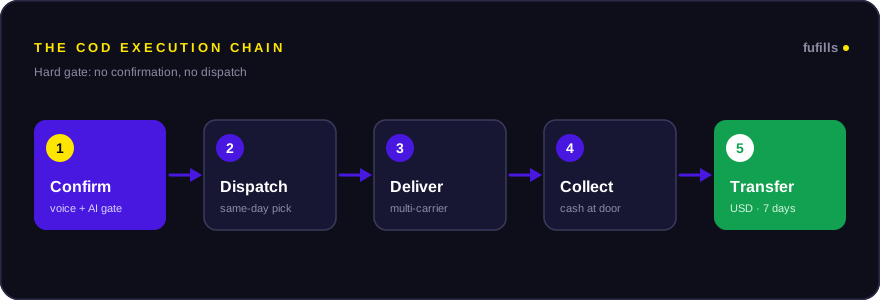
Successful COD requires coordinated systems across multiple functions:
- Order Capture: E-commerce platform with COD option
- Order Confirmation: Call center verification before shipping
- Fulfillment: Warehouse pick, pack, and ship
- Last-Mile Delivery: COD-capable carriers
- Cash Collection: Payment at doorstep
- Reconciliation: Matching collections to orders
- Remittance: Transferring funds to merchant
- RTO Processing: Handling failed deliveries
Order confirmation is the single most important operational lever for COD profitability. A dedicated call center contacts customers after order placement to:
- Verify purchase intent
- Confirm delivery address
- Set delivery expectations
- Identify potential objections
- Potentially upsell complementary items
Well-executed confirmation can reduce RTO rates by 30-50%, dramatically improving unit economics.
RTO is the COD merchant's biggest challenge. When customers refuse delivery or can't be reached:
- Outbound shipping cost is lost
- Return shipping cost is incurred
- Warehouse handling costs add up
- Product may be damaged or depreciated
- Working capital is tied up
At 25% RTO with $15 cost per return, a merchant shipping 1,000 orders loses $3,750 monthly to failed deliveries.
Pre-Shipment
- Strong order confirmation (call within 2-4 hours of order)
- Address validation systems
- Customer scoring to identify high-risk orders
- Realistic delivery time communication
In-Transit
- SMS/WhatsApp delivery notifications
- Pre-delivery confirmation calls
- Flexible delivery scheduling
At-Delivery
- Professional packaging that builds trust
- Multiple payment options (cash, card, mobile)
- Trained delivery personnel
Understanding cash flow is critical for COD businesses:
- Customer places order (Day 0)
- Order confirmed and shipped (Day 1-2)
- Delivery and cash collection (Day 3-7)
- Courier reconciliation (Day 8-14)
- Merchant remittance (Day 15-21)
This 2-3 week cycle means significant working capital is tied up in transit. Factor this into financial planning.
Launch COD Operations in LATAM
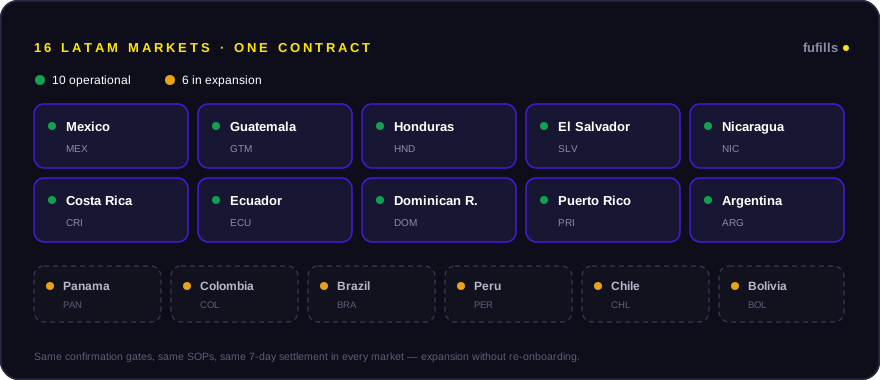
Fufills provides complete COD infrastructure: warehousing, call center confirmation, last-mile delivery, cash collection, and remittance across 16 Latin American countries.
What percentage of LATAM e-commerce is COD?
COD accounts for 50-75% of e-commerce transactions in Latin America, varying by country. Mexico averages 50-55%, Colombia 55-60%, Guatemala and Honduras exceed 70%.
Why is COD so popular in Latin America?
Three main factors: low credit card penetration (25-35% vs 65%+ in USA), trust issues with online payments due to fraud history, and cultural preference for cash transactions.
What is RTO in COD e-commerce?
RTO (Return to Origin) occurs when COD orders fail delivery-customer refuses, is unreachable, or address is invalid. The product returns to warehouse, costing outbound + return shipping plus handling.
How can I reduce COD return rates?
Key strategies: order confirmation calls before shipping (reduces RTO 30-50%), address verification, delivery notifications via SMS/WhatsApp, multiple delivery attempts, and professional packaging.
